
Cyprus Wedding Music: From Traditional Folk to Modern DJs

Plan Cyprus wedding music across ceremony, dinner and dancing, from folk ensembles to DJs, live bands and sound permits.
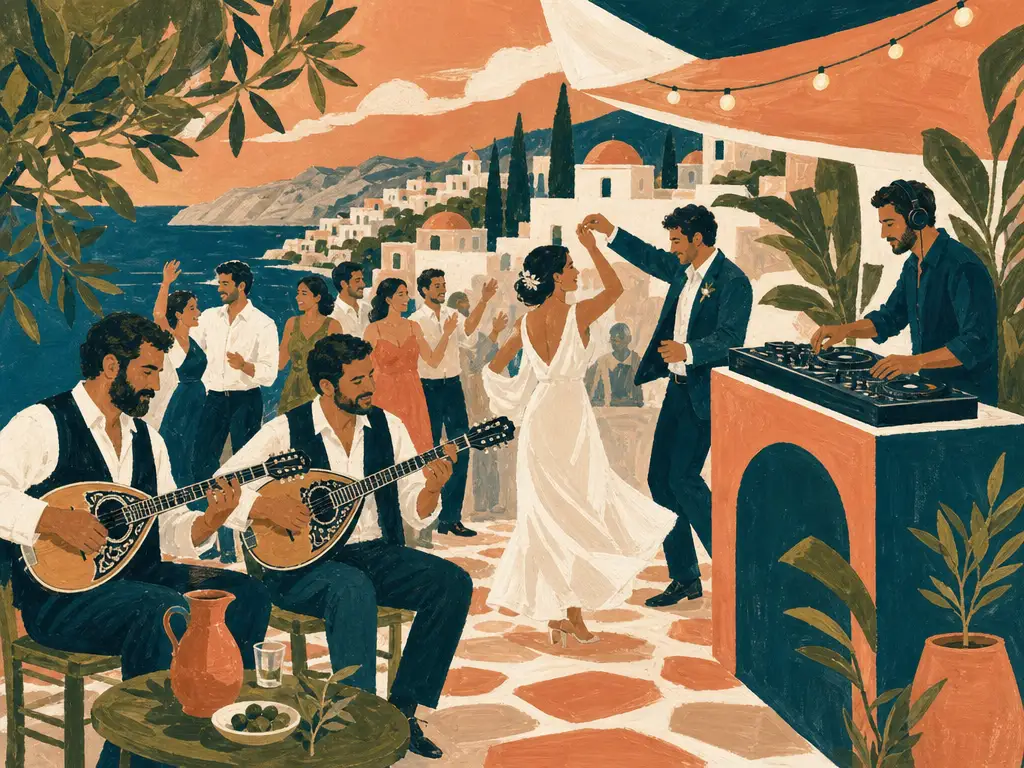
Music decides how your reception feels: the walk down the aisle, the pace of dinner, and whether the dance floor fills by 9pm or empties by half past ten. A Cyprus wedding gives you two traditions to draw on - centuries of Cypriot folk music and a full modern scene of DJs and cover bands - and the skill is knowing where each belongs across the day.
Browse musicians, bands and DJs in our music and entertainment directory, and see where entertainment fits the wider budget and timeline in our complete guide to weddings in Cyprus.
Traditional Cypriot Wedding Music
The Role of Music in Cyprus Weddings
Music runs through the whole Cypriot wedding, not just the party. For centuries a live duo has accompanied the allamata, the ceremonial dressing of the bride and groom in their family home, with a specific song for each moment of the ritual. If you want a genuinely local touch, this is where it comes from - and it plays beautifully to a UK crowd who have never heard it before.
Traditional Instruments
The definitive sound of a Cypriot wedding is the violin (locally fkiolin) paired with the laouto, a long-necked lute. The violin carries the melody while the laouto lays down the rhythm and harmony beneath it - for generations these two instruments alone defined Cypriot wedding music. Two older folk instruments complete the picture: the pithkiavli, a small wooden shepherd’s flute, and the tampoutsia, a goatskin frame drum played by hand. The bouzouki many people picture is mainland Greek rather than Cypriot, though a modern ensemble will happily add one for the guests who expect it.
Songs You Will Hear
Greek and Cypriot celebrations share a songbook. Folk tunes such as “Samiotissa”, a traditional kalamatiano, get guests into a circle, while slower Greek standards suit the quieter moments over dinner. It is worth briefing your musicians on which songs matter to you and which you would rather skip, especially if the family has a particular tune tied to a moment.
Traditional Wedding Dances
Line Dances and Circle Dances
Cypriot dances are built for joining in, not watching. The kalamatiano is a circle dance in a lilting 7/8 rhythm that anyone can shuffle along to. The sirtaki - “Zorba’s Dance” - starts slow and speeds up, which pulls hesitant guests in as the tempo builds. Worth knowing before you bill it as ancient tradition: the sirtaki is not old folk at all but a 1964 invention, written by Mikis Theodorakis for the film Zorba the Greek and choreographed for Anthony Quinn. None of that dents its power to fill a floor. The tsifteteli, a hip-swaying solo dance with Anatolian roots, gives more confident guests room to show off.
The Wedding Dance Tradition
Traditional receptions build in specific dance moments through the evening. The couple’s first dance often starts with a traditional song before the music turns contemporary. The money dance, where guests pin banknotes to the dancing couple, is still common at Cyprus weddings and doubles as a warm way to fold your UK guests into a local custom.
Finding Traditional Musicians
Local Folk Ensembles
Cyprus has folk ensembles who specialise in weddings. These groups usually run to 3-5 musicians on traditional instruments, with enough experience to lead the dances and read a mixed crowd.
Booking Considerations
Traditional musicians typically play 2-4 hour sets, with fees roughly £450-£1,300 (€500-1,500) depending on ensemble size and length of performance. Book 6-9 months ahead for peak-season Saturdays (May, June, September and October), as the experienced wedding acts get taken early.
Cultural Authenticity
If you are not Greek Cypriot, ask upfront how much the musicians explain and lead the dances. A good wedding act will teach guests the basic steps and coax people up without putting anyone on the spot - the difference between guests watching and guests joining in.
Modern Greek and Cypriot Music
Contemporary Mediterranean Sound
Modern Greek and Cypriot pop gives you high-energy dance options with a local flavour. Artists like Sakis Rouvas, Despina Vandi and Helena Paparizou are songs Cypriot guests know by heart, and they introduce your UK guests to current Mediterranean music without losing the room.
Blending Old and New
Most couples blend traditional and contemporary Greek music across the reception. Keep the folk songs and circle dances for dinner and the cultural set, then move into modern Greek pop and international hits as the night goes on.
International Music and DJs
Professional Wedding DJs
Cyprus has experienced DJs who can read a crowd and move between genres and eras. A local wedding DJ typically costs £500-£1,100 (roughly €600-1,300) for an evening reception with PA and basic lighting; full-day cover and extras like ceremony sound push it higher. Flying a DJ out from the UK is the pricier route - once you add flights, accommodation and kit it often lands at £1,500 or more, so most couples book locally and brief thoroughly. If you are worried about communication, most established Cyprus wedding DJs work with UK couples constantly and take a written playlist and running order without fuss.
Music Selection Strategy
The best receptions carry every age in the room. Build a balanced set: traditional Cypriot music for the cultural moment, international classics everyone recognises, current hits for the younger table, and slower songs for the set-piece moments.
Request Lists and Do-Not-Play Lists
Give your DJ both lists. Name the must-plays tied to specific moments (first dance, cake cutting) and the genres you want more of. Just as important, spell out the songs to avoid, whether they clash with your taste or would land badly with certain guests.
Live Bands
Cover Bands and Original Acts
Cyprus has cover bands playing everything from classic rock to R&B, jazz to current pop. A live band brings energy and a focal point that recorded music cannot match, with fees usually £1,300-£4,300 (€1,500-5,000) depending on band size and reputation.
Band Logistics
Bands need more space, power and setup time than a DJ. Confirm your venue can take a band, including load-in access, power supply and sound limits. Outdoor venues may need a specific permit for amplified live music.
Band Break Music
Bands take breaks, so plan music for the gaps. Many bands pair with a DJ for seamless changeovers, or run a recorded playlist during downtime. Settle this at booking so you never hit an awkward silence.
Ceremony Music
Processional and Recessional
Choose ceremony music for personal meaning and for acoustics. A string quartet or classical guitarist suits a calm outdoor Cyprus ceremony. Recorded music works well too, as long as the sound system is good enough to deliver clear audio in open air, where sound carries away fast.
Cultural and Religious Considerations
If you are folding in religious or cultural elements, ask your officiant about the expected music. Orthodox ceremonies follow set Byzantine chants and hymns, while a civil ceremony gives you complete musical freedom. Our guide to getting legally married in Cyprus covers the civil route UK couples usually take.
Live vs Recorded Ceremony Music
Live musicians add polish but cost more. If budget is tight, spend the live money on the reception, where guests notice it most, and use good recorded music for the ceremony.
Creating Your Wedding Playlist
Timeline-Based Organisation
Organise your music by phase of the day:
- Drinks reception: relaxed background - jazz, acoustic, lounge
- Dinner: a touch livelier but still conversational - modern standards, soft pop
- First dances: your chosen romantic songs
- Open dancing: high-energy crowd-pleasers across genres
- Late night: current hits and nostalgic favourites for the guests still standing
Cultural Balance
For a Cyprus wedding with UK guests, balance Greek and Cypriot music with songs everyone already knows. That mix keeps the dance floor full and still honours where you have chosen to marry.
Reading the Room
Good DJs and bands read the room and adjust in real time. Trust an experienced act to change course - what looks perfect on paper often needs tweaking once you see how guests actually respond.
Special Music Moments
First Dance Song Selection
Pick a first dance that fits your relationship rather than defaulting to this year’s wedding hit. Watch the length - 3-4 minutes works; a 6-minute ballad feels endless with everyone watching.
Parent Dances
Father-daughter and mother-son dances are quietly moving. Choose songs whose lyrics reflect the relationship, and keep them to 2-3 minutes to hold the reception’s energy.
Cultural Dance Celebrations
Time the traditional Cypriot dances for when energy is high and a few drinks have loosened everyone up, usually 1-2 hours into the reception. Your band or DJ should announce each dance, run through the basic steps and get people up.
Sound and Technical Considerations
Venue Acoustics
Cyprus venues vary hugely. An open-air beach setting needs far more sound power than a small indoor room, where too much volume just bounces. Talk through venue-specific sound needs when you book.
Volume Management
Set volume so guests can talk over dinner and clearly feel the music once dancing starts. Experienced DJs handle this shift without being asked.
Outdoor Sound Permits and Curfews
This is the one to check early. Cyprus applies a residential noise curfew from 22:00, and late-night amplified music is treated as a nuisance issue rather than something a blanket “until midnight” rule allows. Licensed hotels and dedicated wedding venues usually hold late entertainment licences; villa and private beach settings often do not. Before you book any act, confirm in writing what time the music must come down and whether amplified sound outdoors is permitted at all - it directly shapes how long your party can run.
Booking Your Wedding Entertainment
Questions to Ask
When you interview a musician, DJ or band:
- How many Cyprus weddings have you played?
- Can you share video of your performances?
- What equipment do you bring, and what must the venue supply?
- How do you handle requests and do-not-play lists?
- What is your backup plan if you are ill or kit fails?
- Do you take breaks, and how is the music covered?
Contracts and Expectations
Get performance length, setup and breakdown times, equipment provided, attire, the song-selection process and the payment schedule in writing. Ask for proof of insurance and a stated backup plan for equipment.
Communication and Planning
Book a call 2-3 months out to run through song choices, special requests, timeline and any worries. Hand over a written running order marking every moment that needs specific music. A wedding coordinator can hold this together with your other suppliers if you are managing the day from the UK.
Budget Considerations
Entertainment shapes the guest experience more than almost any other line. A common split is 8-12% of the total wedding budget on music - on an £8-15k Cyprus wedding that is roughly £650-1,800 - covering the atmosphere for the 4-6 hours guests remember most. It is tempting to trim here, but an experienced act who reads the crowd and keeps transitions clean is what carries a reception from dinner to the last dance. Price it carefully rather than cheaply.
The Mediterranean Wedding Music Experience
A Cyprus wedding lets you fold local musical tradition into modern entertainment: violin-and-laouto folk for the cultural moments, a DJ or band for the dance floor, and a playlist that carries both your UK guests and your Cypriot setting. Whichever mix you choose, the point is momentum - keeping the ceremony, dinner and dancing moving.
Pick entertainment that balances local flavour, guest comfort and personal meaning, then lock the venue’s sound rules, curfew and backup plan in writing before you pay a deposit.
Keep reading

Photography
Cyprus Wedding Photography Styles: Editorial, Documentary, Fine-Art
Most photographer style names mean nothing - 'editorial' and 'documentary' are sold as the same product. Here's how to actually tell the styles apart, with what each looks like in Cyprus light.

Florals
Mediterranean Wedding Flowers: A Seasonal Guide
Choose Cyprus wedding flowers by season, from spring anemones to heat-tolerant summer blooms and winter greenery, with real florist costs.